
How to Choose Between Renting or Buying Composite Mats
Composite mats have become essential for industries that require temporary ground protection. Construction, utilities, energy, and event management all rely on them to create access roads, stabilize heavy equipment, and protect sensitive environments. A key decision for project managers is whether to rent or buy. The right choice depends on project scope, frequency, and budget. Using composite site mats is often the first step toward safer and more efficient projects.
Your Choice Matters
Composite mats represent a significant investment. Renting may appear cheaper at first, but repeated use quickly adds up. Buying provides long-term value, but it also requires storage and upkeep. Wouldn’t you want to know which path protects your bottom line before committing thousands of dollars?
When Renting Makes Sense
Renting is often best for one-time or short-term projects. If you only need mats for a festival, a construction job that lasts a few weeks, or emergency storm response, site mat rental avoids large upfront costs. Rental companies usually handle delivery, installation, and pickup, saving time for crews. Renting also ensures you get newer mats, since suppliers rotate inventory frequently. The flexibility of returning mats after the project is finished appeals to companies.
When Buying is the Better Option
For contractors with frequent projects, ownership offers major savings. Buying eliminates ongoing rental fees and gives you control over availability. Mats can be deployed on multiple sites without waiting on third-party schedules. Over time, this control reduces downtime and improves efficiency. Buying also allows companies to choose specific mat types tailored to their recurring needs, such as extra-thick ground protection mats for heavy tracked equipment. A cost comparison study found that renting a 3×5 mat at $0.20 per square foot per week adds up to roughly $780 over five years, while purchasing the same mat outright costs about $100. This demonstrates how quickly ownership can pay off when mats are used repeatedly.
Practical Considerations
Ownership requires more than just the initial purchase. Storage and cleaning are vital to ensure mats last through repeated use. Neglecting this care shortens their lifespan and reduces resale value. Companies should also factor in transportation costs, since hauling mats requires specialized trucks and trailers. Proper planning ensures ownership delivers the maximum return on investment.
A Prime Example
Consider a contractor specializing in renewable energy installations. Their projects take them across different regions throughout the year. By purchasing composite mats, they save on repeated rental fees and guarantee mats are always available when schedules change. Over five years, the cost savings from ownership outweigh the initial expense, even after accounting for storage and maintenance.
Safety and Compliance
For crane and heavy-lift operations, OSHA requires firm, drained, and graded ground -or the use of supporting materials such as mats that meet the equipment manufacturer’s requirements. Refer to OSHA’s Ground conditions for cranes (29 CFR 1926.1402) when evaluating rental vs. ownership policies and site preparation plans.
Composite mats are versatile tools, but the decision to rent or buy depends on more than cost alone. By weighing project frequency, logistics, and future needs, managers can choose the option that offers the greatest efficiency

4 Ways to Maximize Renewable Energy Access With Composite Mats
Renewable energy projects often take place in challenging locations. Wind farms are built on rural ridges, solar installations spread across uneven fields, and transmission lines cut through wetlands or remote terrain. Moving heavy equipment into these areas can damage soil and delay construction. Using composite site mats provides the stable surfaces needed to expand renewable energy access while protecting the environment.
Create access roads in remote locations
Many renewable energy projects require heavy trucks and cranes to reach isolated sites. Composite mats can be laid quickly to form temporary roads across soft ground. They spread weight evenly, preventing ruts and stuck vehicles. This keeps projects on schedule and reduces costly delays. In rural Texas, for example, mats help contractors bring in turbine blades that stretch more than 200 feet without sinking into farmland. Crews often report significant savings on towing costs and fewer weather-related interruptions when mats are used consistently.
Protect sensitive ecosystems
Solar fields and transmission corridors often pass through wetlands or environmentally fragile areas. Without protection, construction can disrupt water flow, compact soil, and harm plant life. Crews can use composite mats to move machinery without permanent impact. Studies show that temporary matting significantly reduces the need for post-construction soil restoration. Wouldn’t it be smarter to prevent damage than to repair it later? Mats also give regulators confidence that developers are taking environmental compliance seriously, which can speed up permit approvals.
Support heavy equipment for installation
Cranes, pile drivers, and drilling rigs exert enormous ground pressure. Composite mats provide a stable base that distributes weight and reduces the risk of equipment tipping or sinking. This stability allows crews to work more efficiently, even in areas with poor soil conditions. One scenario involves a wind project in Arkansas where mats allowed safe crane operation during rainy weeks, keeping installation on track despite the weather. Workers also noted that mats reduced delays from equipment repairs, since machinery was not bogged down or damaged by uneven ground.
Improve efficiency during maintenance
Renewable energy sites require ongoing upkeep. Construction mats can be redeployed to create quick access paths. This not only protects the land but also reduces operating costs over the lifespan of the project. For solar farms, mats are often used to support service vehicles during panel cleaning or inverter replacement. For wind farms, mats provide quick routes for crane crews handling gearbox swaps, which can otherwise tear up access roads during wet seasons.
According to market research, ~45% of demand for temporary access and ground protection mats comes from construction projects, where muddy or unstable ground can otherwise cause schedule delays. Using composite mats not only protects soil and turf but also helps renewable energy developers avoid downtime, keeping projects on track in challenging terrain.
Composite mats give renewable energy developers the access they need to succeed in remote and sensitive locations. They help protect natural landscapes, keep projects on schedule, and reduce maintenance costs over time. With their durability and adaptability, these mats play an essential role in building a cleaner energy future.

How to Use Site Mats for Festival Grounds Protection
Outdoor festivals bring people together for music, food, and community, but large gatherings also put enormous pressure on the ground. Thousands of feet, heavy stages, and service vehicles can leave turf damaged beyond quick repair. Using composite site mats provides a reliable way to protect festival grounds while ensuring guests and equipment move safely across the area.
Why Protection is Essential
Festival organizers often rent public parks, stadium fields, or rural open spaces. These areas are not designed to withstand the weight of delivery trucks or constant pedestrian traffic. Without ground protection, compacted soil and ruts form quickly. Turf repair after a single weekend event can run into thousands of dollars. Wouldn’t it be better to prevent the damage in the first place?
How Construction Mats Work
Ground protection mats distribute weight across a wider surface. This prevents wheels, tires, and even foot traffic from sinking into soft ground. Mats also provide a stable surface for equipment such as lighting towers, sound rigs, and temporary shelters. Their interlocking design allows them to cover large areas quickly, creating temporary flooring or access roads wherever needed.
A Festival Example
Picture a summer concert in a city park. Semi-trucks deliver stage equipment while food vendors set up nearby. Without mats, the wet soil turns into deep ruts, leaving organizers with costly landscaping bills. By laying site mats in advance, the grounds stay protected, trucks move without sinking, and the park reopens to the public the very next day without visible damage.
Benefits for Festival Management
Site mats provide more than ground protection. They give organizers a tool that simplifies planning and reduces the stress of managing both people and machinery in tight spaces. With mats in place, schedules run more smoothly, equipment deliveries stay on time, and guests feel safer moving through the grounds. They also help avoid last-minute surprises that can delay set-up or force repairs during the event itself.
Reduce slip hazards on muddy surfaces
Protect turf and prevent soil compaction
Support heavy loads from trucks and forklifts
Create accessible paths for guests and staff
Speed up event breakdown and site restoration
Environmental Responsibility
Many festivals now focus on sustainability and minimizing environmental footprints. Site mats align with these goals by reducing long-term harm to the land. Instead of replacing damaged turf or repairing compacted soil, event organizers can return the space in nearly original condition. Protecting natural areas preserves good relationships with communities and makes it easier to secure permits for future events.
Mats come in various types, from lightweight panels for pedestrian areas to heavy-duty composite mats for service roads. Renting may be ideal for one-time events, while larger festivals often purchase mats to reuse season after season. A knowledgeable supplier can advise on which mats best fit the size, soil type, and expected traffic of each event.
How Construction Mats Improve Efficiency in Infrastructure Builds
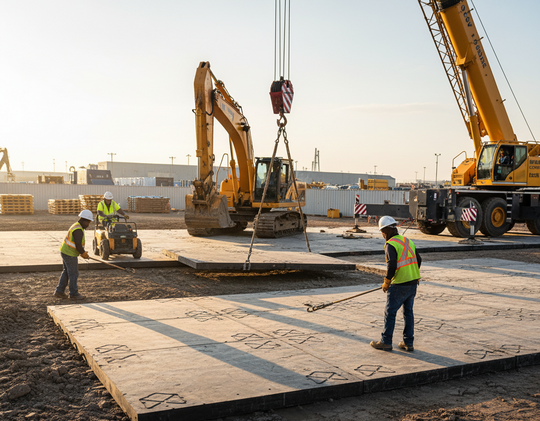
Infrastructure projects often span large distances and involve challenging terrain, heavy equipment, and tight deadlines. Whether it’s a highway expansion, pipeline installation, or utility upgrade, staying on schedule requires dependable access and minimal disruption. Construction mats play a key role in maintaining momentum by improving ground conditions, reducing delays, and simplifying site logistics.
Establishing Instant Access on Unstable Ground
Many infrastructure projects begin in remote or undeveloped areas with soil that is soft, wet, or uneven. Without ground reinforcement, crews risk delays caused by stuck machinery or impassable work zones. Construction mats create instant, stable platforms that support everything from excavators to delivery trucks. By distributing weight and reducing ground pressure, mats allow operations to begin immediately—even on sites that would otherwise need extensive prep work.
Speeding Up Equipment Movement
Delays in equipment transport can have a ripple effect across an entire job site. Construction mats reduce the time needed to move cranes, trailers, and tracked machines by creating reliable, all-weather pathways. Crews can reposition tools and materials faster, which helps prevent bottlenecks and keep each phase of the project aligned with its schedule. This is especially useful in linear builds like roadways or utility corridors, where progress depends on consistent forward movement.
Reducing the Need for Ground Repair
Heavy equipment can cause ruts, soil displacement, and erosion, all of which lead to additional work and cost. Construction mats help prevent this damage by providing a barrier between machinery and the ground surface. This reduces cleanup and site restoration time, allowing teams to shift focus to the next stage of the build. In areas that require environmental compliance, such as wetlands or protected lands, mats also help projects stay within regulatory guidelines by limiting surface disturbance.
Supporting Reusability Across Project Phases
Infrastructure jobs often move in stages, from clearing to installation to final testing. Construction mats are highly reusable and can be picked up, cleaned, and redeployed as the project progresses. This flexibility eliminates the need to source new materials at each phase and allows project managers to maintain control over equipment access without incurring repeated delivery costs. Mats can even be transferred between multiple jobs, adding long-term value to each investment.
Enhancing Safety for Crews and Equipment
Efficiency is about more than speed—it’s also about preventing accidents that lead to delays. Construction mats are often built with anti-slip surfaces and edge designs that improve traction for both vehicles and workers. This is critical on infrastructure sites where rain, ice, or debris could otherwise create unsafe conditions. By reducing risk, mats help keep operations moving without interruption due to injuries or equipment incidents.
When timelines are tight and terrain is unpredictable, construction mats provide a clear advantage. Their ability to create instant access, protect the site, and support mobility makes them a valuable asset in any large-scale infrastructure build.
How Composite Mats Simplify Logistics on Large Sites
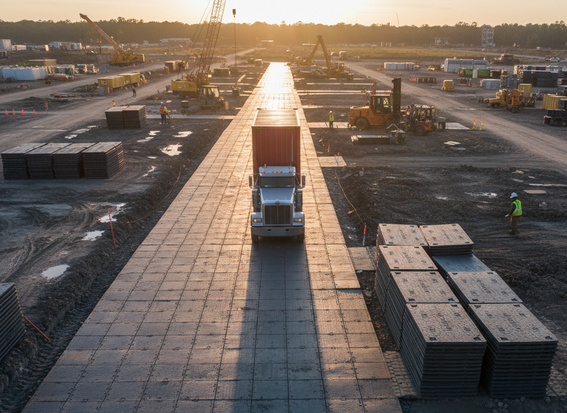
Managing logistics on large construction or industrial sites comes with constant challenges. From transporting equipment across uneven ground to maintaining efficient crew movement, every delay has the potential to impact project timelines and budgets. Composite mats help simplify these logistical concerns by offering a versatile, reusable solution that supports fast deployment and consistent site access.
Lightweight and Easy to Handle
Composite mats are significantly lighter than timber or steel alternatives, making them easier to transport, move, and install. Fewer trips are needed to deliver them to a job site, and crews can often lay them down using lighter machinery or even by hand, depending on mat size. This streamlined handling reduces labor demands and accelerates the start of operations, especially in areas where time is critical or equipment access is limited.
Uniform Sizing Supports Efficient Planning
Standardized sizing and interlocking features mean composite mats can be laid out in predictable patterns with minimal guesswork. This consistency makes it easier for project managers to plan access roads, staging zones, and material storage areas across sprawling sites. Once installed, the mats maintain their shape and alignment even under heavy use, reducing the need for frequent repositioning or repairs.
Reusability Enhances Fleet Management
One of the standout benefits of composite mats is their durability across multiple uses. Mats can be pressure-washed, stacked, and relocated from one area of the site to another as phases of the project progress. This flexibility helps companies get more use from each mat, reducing the need to purchase or rent new materials as the work moves forward. It also helps crews adapt quickly when priorities or weather conditions shift.
Supports Equipment Movement in Tough Areas
Large job sites often span a mix of terrain, from paved entry points to muddy or uneven work zones. Composite mats create a stable platform across these surfaces, allowing equipment to move safely and without delays caused by stuck machinery or damaged access routes. This is particularly useful for operations like crane placement, pipeline construction, and remote utility work where consistent access is critical.
Simplifies Storage and Redeployment
Because composite mats do not absorb water, chemicals, or mud, they remain clean and structurally sound even after extended use. When a portion of the project is complete, mats can be quickly collected, stored without special preparation, and redeployed elsewhere on the site or on a different job entirely. This cuts down on disposal waste and supports leaner operations by reducing material loss between projects.
Composite mats help large sites operate more smoothly by eliminating common access and mobility problems. Their versatility and transportability reduce friction in day-to-day logistics, allowing teams to focus more on completing the job and less on working around unstable or inaccessible terrain.
Industries That Rely on Construction Mats for Safe Access

Construction mats are essential for industries that require stable, durable surfaces in challenging terrain. They protect the ground, support heavy equipment, and keep projects moving in all weather conditions. By choosing the right mat type, companies reduce safety risks, minimize environmental damage, and improve efficiency on the job site.
Oil and Gas Operations
Oil and gas projects often take place in remote or environmentally sensitive areas where access roads do not exist. Heavy-duty composite mats are preferred for these sites because they provide reliable traction for drilling rigs, transport trucks, and cranes. Their non-porous surfaces prevent absorption of oil or chemicals, making cleanup faster and reducing environmental impact.
Utility and Power Line Installation
Installing or maintaining power lines frequently involves traveling through soft soils, wetlands, or agricultural fields. Timber mats are commonly used for their ability to handle the weight of bucket trucks and large spools of cable. For marshy conditions, composite mats are selected to maintain stability and prevent deep ruts that could damage farmland or habitats.
Pipeline Construction
Pipeline projects stretch over long distances and often cross a variety of terrains. Contractors use a mix of timber and composite mats depending on soil type, weight requirements, and environmental restrictions. Timber mats provide cost-effective support for short-term use, while composite mats offer long-term performance in high-traffic areas such as staging sites and equipment crossings.
Renewable Energy Projects
Wind and solar farm construction demands access across large plots of undeveloped land. Composite mats are widely used because they can be deployed quickly, support the weight of turbines or panels during delivery, and handle frequent vehicle movement without degrading. Their reusability makes them a sustainable choice for companies focused on reducing their carbon footprint.
Forestry Operations
Logging crews operate in rugged, remote areas where ground protection is critical for both safety and regulatory compliance. Hardwood timber mats are valued for their ability to withstand the massive weight of logging trucks and skidders. In areas with high moisture, composite mats may be used to avoid rotting and extend usability.
Special Event Infrastructure
Outside of construction, event organizers use lighter composite mats to create pedestrian pathways, protect turf, and support temporary structures. These mats are easy to install and remove, making them ideal for outdoor events.
Key Benefits Across Industries
Across all these sectors, construction mats offer benefits that keep operations moving smoothly. These advantages apply whether the mats are used for industrial, agricultural, or public event purposes.
Reduced equipment downtime due to stable access
Lower environmental remediation costs
Improved worker safety and productivity
Compliance with environmental and safety regulations
Selecting the Right Mat for the Job
Choosing between composite, timber, or hybrid mats depends on the terrain, load requirements, and project duration. Working with an experienced supplier ensures the mats meet both industry standards and site-specific needs, maximizing efficiency and protection.
For industries that demand safe, dependable access, construction mats are more than ground protection; they are a strategic asset that supports productivity, safety, and environmental stewardship from project start to finish.
Why Contractors Prefer Composite Mats for Load Distribution

Contractors working in construction, utilities, and energy sectors face constant challenges in moving heavy equipment across soft or uneven ground. Composite mats provide a dependable solution for load distribution, ensuring that weight is spread evenly to reduce ground disturbance and equipment strain. They are a preferred choice for crews working in demanding environments.
Advantages of Effective Load Distribution
When equipment weight is concentrated on small contact points, the result can be soil compaction, rutting, or even equipment sinking. Composite mats disperse the load across a wider surface area, preventing these costly disruptions. This protects the worksite and helps maintain compliance with environmental regulations that limit ground impact.
Reducing Project Delays
Without proper load distribution, equipment can become stuck or require rerouting, leading to delays. Site mats create a stable travel path that remains consistent even in wet or unstable conditions. This stability means fewer interruptions, allowing crews to stay on schedule and meet deadlines without sacrificing safety.
Common Applications for Load Distribution
These mats allow equipment to operate in difficult terrain, minimizing environmental and structural risks. This improves worker safety and prevents machinery from slipping. This is crucial in many fields:
Pipeline and utility line installation
Renewable energy construction projects
Heavy equipment staging areas
Temporary roads for infrastructure work
Oil and gas exploration sites
Material Strength and Engineering
Composite site mats are engineered from high-density polyethylene or similar polymers that resist warping, absorption, and chemical degradation. They maintain their structural integrity under heavy loads and repeated use, ideal traits for long-term projects with consistent usage. The built-in surface texture provides traction for both wheeled and tracked machinery.
Environmental Protection
Distributing weight evenly helps preserve topsoil and prevents sediment displacement, which is critical near wetlands, waterways, and sensitive habitats. Because composite mats are non-porous, they are easy to clean and sanitize between jobs, reducing the risk of cross-contamination across project sites.
Cost Savings Over Time
Composite mats may cost more upfront than timber alternatives, but their extended lifespan and low maintenance requirements reduce long-term expenses. They can be reused across multiple projects without losing performance, lowering the effective cost per use. Contractors also save on site remediation costs, as mats protect against ruts and erosion.
Anecdotal Evidence
In one utility upgrade project during a particularly rainy season, crews avoided costly downtime by deploying composite mats to stabilize the route for cranes and excavators. Without them, equipment movement would have been severely restricted, delaying the project by weeks. The mats paid for themselves in avoiding delays and improved terrain conditions.
Optimizing Procurement
Selecting the right size and connection style of mats ensures optimal load distribution for specific equipment and terrain types. Contractors often work with suppliers who can provide deployment strategies, transport solutions, and repair kits to keep mats performing at peak capacity.
Composite mats deliver consistent load distribution that protects both the job site and the bottom line. For contractors managing complex, heavy-duty projects, they are a proven investment that prevents costly delays while keeping operations efficient from start to finish.
Benefits of Reusable Composite Mats in Long Term Projects

Reusable composite mats are a strategic asset for long-term projects that need dependable access, surface protection, and cost control. By spreading one investment across multiple deployments, composite mats help crews keep schedules on track while minimizing damage and cleanup. Their consistent performance in varied terrain suits utilities, energy work, and heavy construction across long project phases.
Aligning coverage to real-world work, construction mats reduce project cost while improving safety. When mats distribute weight and prevent rutting, equipment cycles are faster and fuel waste drops. The practical effect is fewer weather delays, less rework after storms, and better crew productivity. Choosing the right thickness, texture, and connection style is the foundation of long-term value.
Long-Term Cost Efficiency
Ownership or lease-to-own models make sense for organizations with recurring access needs. Lower repair frequency, reduced remediation, and reuse across jobs cut the effective cost per day on site. Many projects also qualify for cost recovery through asset depreciation schedules, turning mat inventories into planable capital rather than unpredictable rentals.
Durability and Performance
High-density polymer construction resists rot, moisture, and insect damage, so panels keep their shape after months in wet or frozen conditions. Textured surfaces maintain traction for tracked and wheeled equipment, and sealed edges limit fluid intrusion. Uniform sizing simplifies planning and reduces gaps.
Environmental Compliance
Composite mats spread axle loads, protecting vegetation and topsoil while preventing sediment movement into nearby waterways. Because the panels are non-absorbent and easy to sanitize, teams can move from one sensitive area to another with fewer cross-contamination risks. This reduces restoration labor and helps satisfy permit requirements.
Logistics and Deployment
Compared with timber, lighter panels increase truck payloads and reduce crane time. Integrated lift points speed staging, while stackable profiles save yard space between phases. Providers can barcode or RFID-tag inventories, making retrieval and maintenance cycles predictable and auditable.
Common Long-Term Use Cases
Utility line construction and storm hardening projects
Pipeline installation, inspection, and integrity digs
Renewable energy sites for wind or solar buildouts
Heavy construction on wetlands or soft subgrades
Disaster response access and temporary staging pads
Maintenance and Lifecycle Management
Routine inspections focus on connector wear, surface gouges, and contamination. Most field damage is repairable with simple kits, extending service life without factory returns. Cleaning programs using low-pressure wash and containment mats keep panels job-ready and compliant with environmental plans.
Procurement Strategy and ROI Tracking
Selecting panel size, connection hardware, and transport assets together yields savings. Teams can model daily cost by combining purchase price, service cycles, repair rates, and freight. Capturing usage hours and job conditions produces a defensible cost per lane-foot. With that baseline, managers choose lease, buy, or hybrid approaches, retiring panels while the resale value remains high and warranty support is available.
Standardized specs reduce surprises, minimize environmental impact, and enhance productivity. When procurement, field operations, and compliance coordinate early, results improve on every job. Across years of service, mats justify themselves through predictable mobility, controlled costs, and truly dependable performance on soft or saturated ground in demanding, long-duration projects.
Leasing Versus Purchasing Composite Site Mats
Leasing and purchasing composite site mats both offer advantages, but the right choice depends on project scope, budget, and long-term equipment needs. Composite mats provide stable ground for heavy equipment, protect sensitive terrain, and improve access in challenging conditions. Understanding the differences in cost, flexibility, and ownership benefits can help you decide which option fits best.
Cost Considerations
Purchasing construction mats requires more upfront investment, but the assets remain available for repeated use across multiple projects. Ownership can reduce per-project costs for companies with frequent matting needs. Leasing, on the other hand, spreads costs over a shorter term and may include delivery, installation, and retrieval services. This approach frees capital and limits storage requirements.
Flexibility for Different Project Types
Leasing is ideal for short-term or unpredictable projects. It allows companies to scale mat quantities quickly and return them when no longer needed. Purchasing is better suited to businesses with consistent matting needs, such as utility contractors, oil and gas operators, or construction firms with ongoing infrastructure work. Having mats in your available inventory eliminates scheduling constraints that can occur with rental demand surges.
Maintenance and Storage Responsibilities
Owned mats require regular cleaning, inspection, and repairs to maintain performance and safety. They must also be stored in a secure, weather-protected location. Leased mats typically arrive ready for immediate use, with the provider responsible for maintenance between rentals. For companies without the facilities or workforce to manage upkeep, leasing can be more convenient and cost-effective.
Environmental and Compliance Factors
Composite mats are designed for reusability, which supports sustainability goals and compliance with environmental regulations. Leasing providers often manage disposal or recycling for damaged mats, ensuring compliance without adding logistical challenges. Owners maintain full control over environmental procedures but must follow industry standards to avoid penalties.
Industry Use Cases
Companies choose between leasing and purchasing based on operational needs, balancing cost efficiency with operational readiness:
Energy companies need temporary access during drilling or pipeline installation
Construction firms working on multiple job sites with varying terrain
Utility contractors handling seasonal maintenance or emergency response
Event organizers require temporary ground protection for crowds and equipment
Balancing Short-Term Savings and Long-Term Value
Anecdotal evidence from contractors shows that leasing often works best for companies experiencing rapid growth, fluctuating workloads, or limited storage capacity. Purchasing becomes more cost-effective when projects are frequent and the mats can be used repeatedly without significant downtime.
Resale and Asset Recovery Opportunities
For companies that purchase composite mats, there is potential to recover some of the initial investment by reselling mats that are no longer needed. Many used mats retain value if they are in good condition, making them attractive to smaller contractors or event organizers. This resale option can help offset costs and improve overall return on ownership.
By weighing cost, flexibility, and logistical demands, you can choose the composite mat solution that supports your project goals while maximizing return on investment. Whether leasing or purchasing, the right approach ensures safer access, better ground protection, and fewer delays in the field.
How Construction Mats Improve Site Safety and Stability

Construction sites are full of moving parts, from heavy machinery to foot traffic, all operating on terrain that may be soft, uneven, or slick. In these environments, maintaining safety and stability is a top priority. Construction mats offer a practical solution by creating dependable access paths and work surfaces that reduce risks and support efficient operations.
Preventing Equipment Sinking and Shifting
Unstable ground can lead to serious hazards, especially when supporting the weight of cranes, loaders, and transport vehicles. Without a solid surface, equipment may sink, tilt, or become stuck, increasing the likelihood of accidents and delays. Construction mats distribute weight more evenly across the surface, reducing ground pressure and helping machines stay level during operation. This support minimizes the chance of rollovers or mechanical stress caused by unstable terrain.
Improving Footing for Workers
Slip and trip hazards are a constant concern, particularly in wet or muddy areas. Construction mats provide a firm, textured surface that improves grip for both footwear and tires. Workers can move confidently across the job site without navigating soft ground or uneven footing. This is especially important in high-traffic areas such as staging zones and material drop points, where stability helps prevent falls and injuries.
Managing Weather-Related Challenges
Rain, snow, and fluctuating temperatures can turn a solid job site into a slippery mess. Construction mats help combat these issues by shielding the ground from excessive wear and creating a consistent work surface. Many mats feature anti-slip tread patterns that maintain traction in poor weather conditions. They also resist moisture absorption, which keeps them from becoming slick or degrading over time.
Reducing Ground Disturbance and Environmental Risks
When working in sensitive environments or near protected areas, controlling site impact is essential. Construction mats limit soil displacement and rutting, which can destabilize nearby structures or cause drainage issues. By maintaining a more even and undisturbed surface, they help reduce erosion and maintain compliance with environmental regulations. This contributes not only to a safer work zone but also to more responsible site management.
Supporting Load Stability on Variable Terrain
Sites often include transitions between different ground types, such as gravel to grass or pavement to sand. These shifts can cause jarring changes in load support, increasing the chance of tipping or mechanical damage. Construction mats bridge these gaps, offering continuous support and load-bearing strength regardless of the underlying surface. This added stability helps crews operate more efficiently and with fewer equipment-related setbacks.
Construction mats serve as both a protective layer and a safety feature. Their presence makes the site easier to navigate, less prone to damage, and better prepared to handle the weight and movement of an active project. When safety and stability are at stake, these mats become more than just a convenience—they become essential tools for keeping projects on track and workers protected.
Why Composite Mats Are a Smarter Choice for Tough Terrain

Not every job site offers ideal working conditions. From marshy access roads to uneven rocky surfaces, tough terrain presents serious challenges for moving equipment and maintaining productivity. That’s why many contractors are turning to composite mats as a more dependable solution. These mats offer a combination of strength, stability, and flexibility that traditional materials struggle to match.
Reliable Ground Support in Unpredictable Conditions
Rugged environments demand mats that won’t buckle, shift, or degrade under stress. Composite mats, made from high-performance polymers, are engineered to stay solid under pressure. Whether the ground is saturated with rainwater or riddled with loose gravel, these mats distribute weight evenly and provide a firm platform for vehicles and machinery. Unlike timber, which absorbs moisture and can become slick or warped, composite mats maintain their structure and grip through changing conditions.
Performance Without the Heft
Weight matters when setting up access roads or staging areas in remote regions. Composite mats are significantly lighter than many hardwood alternatives, yet they still deliver the load-bearing performance required for tracked vehicles, cranes, and other heavy equipment. This balance of strength and portability helps reduce fuel costs, speed up installations, and make transport more manageable. Fewer trips and less strain on hauling equipment can translate into faster timelines and less wear on the crew.
Durability That Pays for Itself
One of the biggest advantages of composite mats in rough environments is their long lifespan. The materials used in composite construction resist splitting, rotting, and chemical corrosion. They can be cleaned easily after use in muddy or contaminated areas, making them ready for redeployment without special treatment. For crews that regularly work in demanding areas, this reusability adds long-term value while reducing replacement costs.
Traction and Safety on Every Surface
Tough terrain often means unstable footing and increased risk for slips or equipment mishandling. Composite mats are built with tread patterns that provide reliable surface traction, improving both vehicle stability and worker safety. Even in rain, snow, or icy conditions, these mats help maintain consistent grip and minimize disruptions to the job. Crews can work with more confidence knowing the surface beneath them is designed to reduce hazards.
Better Control, Fewer Compromises
Every job site has its variables, but composite mats offer a level of predictability that helps teams stay on schedule. They are built to perform in the kinds of terrain that slow down traditional options. Their design supports safer access, easier installation, and better endurance, even when conditions are less than ideal. For projects that take teams off the beaten path, composite mats make the journey smoother, safer, and more efficient.
What to Consider When Choosing Construction Mats

Choosing the right construction mats can make the difference between a job that runs smoothly and one plagued by delays, equipment issues, or site damage. Ground conditions, load requirements, environmental factors, and project scope all affect which mats are best for your needs. A poor choice can lead to unstable access roads, increased maintenance costs, or even safety hazards. That’s why contractors turn to proven materials like composite mats for consistent performance across changing terrain.
Understand the Site Environment
Every job site presents unique challenges. Before selecting construction mats, evaluate the soil type, moisture levels, and surrounding vegetation. Soft or saturated ground calls for mats with excellent weight distribution to prevent rutting or equipment sinking. In areas with environmentally sensitive features, non-invasive and non-absorbent mats help minimize impact. Composite mats perform especially well in such conditions because they resist water, mud buildup, and chemical contamination.
Load and Equipment Requirements
Not all mats are created equal. A project involving cranes, tracked vehicles, or heavy transport trucks requires mats that can handle concentrated loads without flexing or cracking. For lighter jobs with pedestrian traffic or small machines, thinner mats may suffice. Composite mats come in various thicknesses and configurations, offering different load-bearing capacities while remaining lighter than traditional hardwood options. Choosing a mat matched to your heaviest equipment is key to avoiding performance failures in the field.
Durability and Reusability
Construction site mats often take a beating on projects that span weeks or involve multiple relocations. Durability affects both immediate performance and long-term value. Composite mats are engineered to withstand repeated use, making them a cost-effective choice for contractors working across multiple job sites. They resist rot, warping, and splintering, unlike traditional wood mats that degrade quickly in wet or high-traffic conditions.
Safety and Surface Traction
Safety matters just as much as structural support. Mats should provide slip resistance for both equipment and crew members. Surface texture, edge design, and overall grip play a role in maintaining stable footing, especially in wet or icy conditions. Composite mats are often designed with anti-slip tread patterns that hold up over time and through frequent washdowns.
Installation and Handling Considerations
Efficient setup and breakdown can reduce labor costs and prevent delays. Construction mats that feature lifting handles, uniform sizing, and interlocking systems save time and reduce the need for specialized machinery. Composite mats, being lighter and easier to stack, are ideal for rapid deployment. Their ability to be quickly moved and reused also helps contractors meet tight project schedules.
Key Selection Factors to Keep in Mind
Site terrain and ground stability
Expected load weight and vehicle type
Length of project and reuse potential
Weather exposure and water conditions
Handling equipment and crew logistics
Choosing construction site mats is about performance, longevity, and adapting to the job’s unique demands. Composite mats offer a balance of strength, reusability, and environmental protection that traditional materials can’t match. When every hour on site counts, making the right choice up front protects your timeline, your equipment, and your bottom line.
Why Contractors Prefer Composite Mats for Reusability

Contractors working in diverse environments need ground access solutions that perform consistently, job after job. That’s why so many prefer composite mats for stability and safety, along with their proven reusability. Whether managing remote access roads, temporary staging areas, or work zones for heavy machinery, composite mats provide the durability and reliability required to move quickly from one project to the next.
Designed to Last Through Repeated Use
Composite mats are engineered from high-density polyethylene (HDPE) or similar polymers that resist cracking, warping, or breaking under stress. Unlike timber mats that absorb moisture and degrade over time, composite mats are impervious to water, oils, and most chemicals. This resistance keeps them in service longer, even after being used in wet, frozen, or high-traffic conditions.
Because they don’t splinter, rot, or absorb contaminants, composite mats can be used again and again without losing structural integrity. For contractors with jobs across changing terrains, that kind of consistency matters. A mat used in a muddy bayou project one month might be cleaned and redeployed on a dry upland site the next with no loss in performance.
Durability That Pays Off
Contractors measure success not just in job completion but in cost control. Composite mats can be employed in dozens, even hundreds of deployments when handled and stored properly. Their resistance to UV exposure and mechanical wear means that a single investment in mats can yield returns across multiple seasons and job sites.
Even after repeated use, these mats maintain their interlocking design, load-bearing capacity, and surface traction. That reliability cuts down on repair or replacement delays, allowing crews to stay on schedule and minimize unexpected costs. It also reduces downtime caused by equipment becoming stuck in soft ground or unstable areas.
Easy to Clean and Transport
Reusability isn’t just about material strength; it is about ease of handling. Composite mats are easier to clean than timber alternatives. Their non-absorbent surface doesn’t trap mud, oil, or chemicals, making them suitable for environmentally sensitive areas. A simple pressure wash removes residue, making the mats ready for redeployment in less time.
These mats are also lighter than many wood-based options, which reduces transport costs. Contractors can move more mats per load and install them faster using lighter lifting equipment. The time saved during setup and teardown adds further value to each reuse cycle.
Features That Support Reuse
Molded handles or lifting points for safer handling
Uniform dimensions for consistent placement and stacking
Interlocking edges for secure connections
Anti-slip surface textures that hold up to wear
Built-in resistance to UV, moisture, and chemical exposure
A Smarter Asset
Contractors managing multiple jobs with different terrain and weather conditions appreciate how composite mats simplify logistics. Mats can be stored between projects without special care and reused without worry about performance loss. That long-term value supports better budgeting, more accurate job estimates, and fewer surprises in the field. For contractors who prioritize performance, cost efficiency, and environmental responsibility, composite mats deliver on all fronts. Their reusability is a strategic advantage.
How Does Leasing Composite Mats Reduce Company Overhead?
Managing equipment access in remote or rugged environments can be expensive, especially when ground conditions are unpredictable. For many companies, leasing composite mats instead of purchasing them outright is a smart way to reduce overhead while still securing dependable site access. This approach gives teams the flexibility to meet project demands without long-term storage, maintenance, or capital investment concerns, all while adapting to changing job requirements with ease.
Lower Upfront Costs
One of the most immediate benefits of leasing composite mats is avoiding the high initial purchase price. Buying large quantities of mats typically requires a significant capital investment, which can strain budgets for small to mid-size contractors. Leasing allows businesses to allocate resources more effectively, paying only for what’s needed when it’s needed. This frees up funds for other priorities, like equipment upgrades, staffing, or expanding service offerings.
No Storage or Maintenance Costs
Owning composite mats comes with logistical burdens. When not in use, they must be stored properly to avoid unnecessary wear or damage. Maintenance becomes another concern, especially if mats are frequently exposed to heavy machinery or harsh conditions. Leasing eliminates ownership responsibilities. Once the job is complete, mats are returned without the need for cleaning, repair, or warehousing, reducing long-term costs and operational hassle.
Flexibility for Seasonal or One-Time Projects
Some industries operate on highly seasonal timelines. Pipeline installation, utility maintenance, and certain construction phases may only need composite mats for a few months out of the year. Leasing lets companies scale access solutions based on current workloads rather than investing in a permanent fleet. This model works well for contractors who handle diverse projects across multiple locations, where owning mats might not make sense or offer a financial return.
Job-Specific Adaptability
Leasing composite mats gives companies the option to select the right mat type for each job. From lightweight options for pedestrian access to heavy-duty mats designed for cranes and tracked vehicles, leasing partners often offer a variety of choices. That adaptability is critical when ground conditions vary from site to site. Companies can request the best configuration for each project without being limited by the inventory they own.
Key Benefits of Leasing Composite Mats
Reduces capital expenses
Avoids storage and maintenance logistics
Improves flexibility for short-term projects
Access to a wide range of mat types
Simplifies project budgeting and planning
Real Savings Across the Project Lifecycle
For a construction firm operating across multiple states, leasing composite mats can streamline budgeting and lower risk. Instead of purchasing and tracking assets, the company coordinates directly with the leasing provider, who handles delivery and pickup. This reduces the need for in-house transportation and frees staff to focus on the job itself. Over time, the reduction in maintenance costs and idle inventory helps improve profit margins while supporting project scalability.
Leasing composite mats is a practical approach to smarter project management and financial suitability. For companies that value flexibility, efficiency, and control over expenses, leasing provides a scalable solution that keeps operations moving without the burden of ownership.
What Industries Benefit Most from Composite Mats

Composite mats have become a go-to solution for industries that demand durable, stable ground access in unpredictable environments. Whether you’re navigating soft soils, wetlands, or rough terrain, these mats provide a reliable surface for equipment and workers. Industries with heavy access needs benefit the most from using composite mats as part of their standard operations.
Energy and Utility Projects
Power line construction, oil and gas operations, and wind farm development often require temporary roads across challenging ground. Composite mats offer load-bearing strength while protecting soil and vegetation. Utility crews in rural regions rely on these mats to access poles, substations, or turbines without damaging farmland or causing rutting. Their quick deployment and reusability make them a cost-effective solution during all phases of utility installation and maintenance.
Construction and Site Access
Heavy equipment and tracked machinery need stable footing, especially in areas with soft or saturated ground. Composite site mats distribute weight and create a safe passage for dozers, cranes, and excavators. They’re ideal for remote job sites or urban infill projects where ground conditions change. Unlike timber mats, which absorb moisture and break down, composite mats resist rot and last longer, making them ideal for construction firms that work across multiple states and seasons.
Pipeline and Infrastructure Work
Pipeline crews often operate in remote areas where protecting native vegetation is a priority. Composite mats allow for consistent access while reducing the risk of erosion or waterway contamination. Because they’re easy to clean and don’t absorb contaminants, they support environmental compliance efforts. Infrastructure projects like highway expansion or bridge repair also use mats to create temporary work zones or staging areas without damaging underlying surfaces.
Events and Logistics
Large outdoor events like festivals, temporary installations, and staging areas for logistics operations use composite mats to build walkways, load zones, or parking pads. Their modular design makes them easy to install and remove without heavy labor. For film crews, emergency services, or large-scale public events, they provide safe access to areas that would otherwise be inaccessible after rain or traffic.
Military and Emergency Response
Emergency response teams and military logistics operations depend on fast, reliable access to unstable or unpredictable ground. Composite mats provide temporary roads and helipad surfaces in disaster zones or forward operating bases. Their non-conductive properties also make them safe for equipment staging around power sources or communication infrastructure. In time-sensitive operations, the ability to deploy access systems quickly without permanent disruption is critical.
Key Advantages of Composite Mats
Lightweight and easy to handle
Durable in extreme weather conditions
Non-absorbent and environmentally safe
Compatible with tracked and wheeled vehicles
Reusable across multiple job sites
Industries that rely on mobility and stability see long-term value in composite mats. Their consistent performance in rough or sensitive environments makes them an essential tool across sectors. Instead of dealing with delays, companies can focus on getting the job done efficiently. Composite mats are for any operation where ground stability and access matter. From infrastructure to clean energy, their value stretches across terrain, season, and application.
The Impact of Matting Choices on Equipment Wear and Tear

Heavy equipment carries your timeline, your costs, and your crew’s safety. But the terrain it travels over plays a major role in how well it performs. Rough ground, shifting surfaces, and soft soil all put extra strain on your machines. Over time, that strain adds up. It leads to more breakdowns, higher fuel use, and shorter equipment lifespans. Choosing the right construction mats helps reduce that wear and tear from the start.
Stable Surfaces Prevent Unnecessary Stress
Your equipment’s moving parts endure constant challenges. Suspensions, joints, and hydraulic systems all take a hit when the ground gives way. Rutted paths and muddy slopes force machines to work harder just to stay upright. With proper construction mats in place, your machines move smoothly. A stable surface keeps everything level, providing more satisfactory results.
Composite Mats Keep Vibration in Check
Uncontrolled vibration leads to faster damage, especially inside your equipment. Loose bolts, cracked brackets, and worn seals often start with uneven terrain. Composite mats provide an even, cushioned layer under your equipment. A less impactful ride means fewer shocks to the system. When your equipment rolls across a mat instead of bouncing through a trench, every part of it lasts longer.
Extend the Life of Tires and Tracks
Ground conditions directly affect your most expensive wear parts. Tires and rubber tracks take damage quickly on rocky or unstable surfaces. Jagged edges, mud pockets, or loose fill all chew through tread and sidewalls. With construction mats, you create a uniform driving surface. That reduces spinouts, grinding, and traction loss. Over time, those small reductions in friction make a big difference in how long your parts last.
Undercarriage Protection That Pays Off
Wet or broken ground often exposes your machines to hidden risks. Bent panels, rusted fittings, and clogged undercarriages all happen when mud and moisture sneak in. Composite mats act as a clean, dry layer that keeps equipment elevated. You prevent contact with harmful debris and moisture. That reduces corrosion and keeps your undercarriage easier to maintain after every shift.
Better Ground Equals Better Fuel Use
Machines burn more fuel when traction is poor. They work harder, spin their wheels more, and overcompensate for every slope. With matting in place, traction improves, and so does control. That makes operation easier on your crew and your fuel bill. The difference adds up fast on multi-week projects where fuel costs can balloon without warning.
Avoid Repairs and Keep the Schedule Moving
Downtime costs more than the repair itself. When a dozer or excavator goes down, entire crews wait. Deadlines slip. Matting can’t stop every breakdown, but it can reduce the risk. By limiting unnecessary stress, your equipment stays in service longer. You avoid surprise repairs and stay focused on completing the job.
Good matting choices protect more than the ground– they protect your investment. By limiting vibration, improving traction, and reducing exposure to rough terrain, construction mats help your equipment last longer and perform better. That means smoother projects, safer crews, and fewer unexpected costs.
Selecting the Ideal Matting Solution for Wetland Construction Projects

Wetland construction brings its own set of challenges. The ground is soft, moisture levels stay high, and access routes change regularly. Heavy equipment needs a stable surface that won’t sink or tear up the terrain. That’s why choosing the right matting solution matters from day one. Without it, you risk damage to the site, costly delays, and major safety issues for your crew.
The Demands of Wetland Projects
Unlike typical job sites, wetlands shift under pressure. What seems stable in the morning may not hold by midday. Equipment weight, weather, and water levels all affect access. Composite mats solve this by spreading the load and reducing impact. With the right mat, you move safely across mud, marsh, or standing water. That stability lets your crew work with confidence and stay on schedule.
Why Composite Mats Outperform
Timber mats are a familiar choice, but they’re not ideal for wetland use. Wood absorbs moisture, swells, and eventually breaks down. Composite mats resist water, don’t rot, and keep their shape under heavy loads. They’re made from materials designed to perform in wet conditions. That means fewer replacements, lower maintenance, and better long-term value. They also provide better traction, reducing the risk of equipment slipping or shifting on soft ground.
Building Responsibly
Wetlands are often environmentally protected areas. Construction damage can lead to serious penalties or halted work. Using the right mats helps you stay compliant. Construction mats prevent rutting, minimize ground disturbance, and reduce sediment runoff. They create a barrier between your equipment and the ecosystem below. Mats keep you aligned with regulations that avoid costly restoration. It also demonstrates to clients and agencies your adherence to environmental obligations.
Setup and Removal
Wetland jobs usually have tight windows. Weather delays and seasonal access rules make speed essential. Composite mats are installed quickly and lock into place. When the job’s done, they come up just as fast. They don’t fall apart or soak up mud like timber does. That means less cleanup and no damaged mats left behind.
Reusable Across Projects
Once you’ve finished one wetland build, you can reuse the same mats on the next. They hold up across tough conditions and frequent moves. That durability makes composite mats a cost-effective solution over time. You’re investing in gear that lasts and performs every time you need it. Whether it’s a utility line or conservation bridge, the mats adapt to the job.
Tailor Your Mat Usage
No two wetland sites are exactly alike. Some mats are built for massive weight loads. Others are easier to handle and place by hand. Think about your soil type, equipment weight, and access routes. Matching the mat to the job ensures better performance and makes the project run smoother, improving employee morale and reducing safety incidents.
When you’re building in wetlands, solid ground is never guaranteed. The right construction mats let you work confidently without harming the site. Whether it’s short-term access or months of activity, a smart matting solution protects both your crew and the land beneath them.
Timber Mats vs. CLT Mats: Choosing the Right Support for Bridge Construction
Bridge construction demands strength, stability, and adaptability. You need a base that can support large cranes, drilled shaft rigs, and heavy traffic. For decades, contractors have relied on timber mats to provide site access. They’re widely available, easy to deploy, and familiar to most crews. Hardwood timber offers decent load distribution and works well in a variety of soil conditions. But traditional wood comes with limits that can be addressed with CLT or composite mats.
Why Many Crews Are Moving to CLT Mats
Cross-laminated timber (CLT) mats take wood mats to the next level. Built from engineered layers, they offer stronger performance, higher consistency, and better longevity. While they look similar on the surface, CLT mats don’t split or rot the way untreated wood can. Each layer is bonded for extra load resistance, so mats handle extreme weight without falling apart. If you’re working near water or in soft terrain, CLT mats provide a more durable surface that keeps its shape.
Weight and Handling Make a Big Difference
Traditional timber mats are heavy, and that weight adds time to every setup. Crews often need more lifting power to place or move them. CLT mats are up to 40% lighter, which makes them easier to transport, install, and reposition. That weight reduction also means fewer trucks are needed to move mats to the job site. That translates to lower fuel use, faster placement, and fewer labor hours without sacrificing load capacity.
Performance in Wet and Sensitive Areas
Bridge work often starts near rivers, wetlands, or steep embankments. That’s where the performance gap becomes clear. Standard timber mats absorb water, and over time they can rot or lose shape. CLT mats don’t soak up moisture the same way. They maintain structural integrity even when exposed to repeated rain or runoff. That stability reduces the risk of equipment shifting, which helps crews stay safe and on schedule.
Cost Is More Than Upfront Price
Timber mats typically cost less at the start. But long-term projects expose their limits. When boards split or the structure weakens, you’re stuck with replacement costs, lost time, and disposal headaches. CLT mats last longer and can be used across multiple bridge builds. Frequent reusability offsets their initial investment. Fewer replacements reduce disruptions, beneficial in industrial situations, or time-sensitive projects such as a tight DOT timeline or staging near live traffic.
Which One Makes Sense for Your Bridge Project?
If your project is short-term, with dry conditions and lighter loads, timber mats may do the job. But for large-scale, high-load bridge construction– especially on soft or wet ground– CLT mats deliver better performance and more value. They’re easier to manage, hold up under stress, and reduce the wear on equipment and crews.
Bridge work doesn’t allow for weak points. Whether you’re drilling pilings or lifting beams into place, the right construction mats support your schedule and your safety. Knowing when to use timber and when to upgrade to CLT could be the key to keeping your next bridge project moving forward.
How Composite Mats Enhance Safety in Utility Maintenance Projects

Construction sites rarely offer perfect conditions. One week it’s dry, the next it’s soaked. Slopes, mud, and soft ground all put your equipment and crews at risk. That’s why stable surfaces using construction mats are crucial from the first day on site. With composite mats, you create fast, reliable access no matter what the terrain throws your way.
Keep Your Equipment Moving
When the ground gives way, work stops. Heavy trucks, cranes, or excavators can’t move through deep mud or uneven terrain without damage. That’s where construction mats come in. These panels spread out weight and help prevent rutting or collapse. Your machines keep moving—and your schedule stays on track. You also reduce wear and tear on equipment, lowering maintenance costs over time.
Composite Mat Functional Benefits
Rain, snow, or extreme heat won’t stop a project when you have the right support. Unlike timber, composite mats won’t crack, swell, or rot. They don’t absorb water or split under load. That means you can count on consistent performance across every season. They’re strong, reusable, and built to last across multiple job sites. With long-term use, they offer excellent return on investment and greater site control.
Preserve Environmental Standards
In environmentally sensitive zones, ground damage can cost you permits or fines. Composite construction mats help reduce that risk. They spread the impact of each machine and keep soft soil intact. You avoid long-term damage, limit restoration work, and show you’re serious about protecting the land. Your projects now require access systems that minimize environmental disruption, making mats a jobsite necessity.
Stay Ahead of Deadlines
Most mats can be installed using your current site equipment. Once down, they lock together and create a safe, level surface. When the job’s done, the mats come up quickly and cleanly, minimizing site repair. Fast removal means quicker project turnover and fewer delays.
Choose the Right Mat for the Job
Every site brings different challenges. Some mats are lightweight for quick moves. Others are heavy-duty and made for crane pads or tracked rigs. Picking the right setup helps you get the best performance without wasting budget or overbuilding.
Safety and Mobility
Uneven ground creates hazards. Slips, twisted ankles, or toppled loads can cost more than lost time. With mats in place, crews walk and work with more confidence. The stable surface helps reduce accidents and improve job flow. Better footing supports better results. Safer projects result in higher morale and fewer liability issues.
Reusability Reduces Costs
Composite mats clean easily and don’t hold chemicals or moisture. You won’t deal with soggy timber or broken boards. They can be stacked, requiring less space, while remaining ready for deployment. Over time, their durability pays off in lower costs and smoother transitions between jobs. Long-term use means fewer material orders and easier project planning.
Composite mats give your team the edge when nature works against you. Whether you’re building over mud, marsh, or hills, the right construction mats help your site stay productive, your equipment safe, and your project on schedule.
Comparing Different Types of Construction Mats

Construction mats play a crucial role in keeping job sites safe, stable, and efficient– especially when crews are working on uneven, muddy, or sensitive ground. Companies like Select Mat maintain a wide variety of matting options to match the unique demands of different projects. Here’s a closer look at the main types of construction mats and how each performs under different conditions.
Composite Mats
Composite mats are made from high-density polyethylene (HDPE), which makes them both strong and lightweight. They’re a great option for temporary roadways and work platforms, especially in tough environments. These mats resist moisture, chemicals, and UV damage, and their interlocking edges create a stable, slip-resistant surface. Key benefits include:
Easy to move
Reduce transport costs
Holds up well against rot
Resistant to harsh weather
Timber Mats
Timber mats are built from solid hardwood and are built to take a beating. They’re commonly used in heavy-duty projects like pipeline construction and utility work where support for massive machinery is needed.
They shine when it comes to load-bearing capacity– perfect for cranes or when you need to build a quick bridge. But they’re heavy, which makes them costlier to transport. They also soak up water, which can add even more weight and lead to maintenance or contamination issues.
CLT (Cross-Laminated Timber) Mats
CLT mats offer a middle ground between strength and ease of use. They’re made by bonding multiple wood layers together, creating a mat that’s lighter than solid timber but still strong enough for most jobs.
Their lighter weight means lower shipping and handling costs. They’re ideal for rubber-tired vehicles and make solid temporary roads. However, they’re not well-suited for tracked equipment and don’t hold up as well under extremely heavy loads compared to timber mats.
Laminated Mats
Laminated mats are made by fastening layers of wood together– usually with bolts or nails. They’re one of the more affordable options and are often used for quick, temporary ground protection.
They provide a flat, smooth surface for rubber-tired vehicles and come in different sizes to fit various needs. But they aren’t the most durable choice, and they don’t pair well with tracked machinery.
Crane Mats
As the name suggests, crane mats are built for big lifting jobs. Made from thick timbers, these mats are designed to hold up under extreme weight and pressure.
They’re essential when working with cranes or other massive equipment and can even be used to build temporary bridges. The trade-off is that they’re heavy and bulky, which means more effort and cost to move and maintain. But when heavy lifting is involved, nothing beats their stability.
The best construction mat for the job depends on your equipment, site conditions, timeline, and budget. Composite mats offer flexibility and are easy to reuse. Timber and crane mats provide serious strength for the most demanding tasks. CLT and laminated mats offer lightweight, lower-cost solutions for lighter or short-term use. Understanding what each mat offers helps project managers choose the right setup to keep operations running smoothly and safely.